DAY 1: Arrival DELHI
Arrival at Delhi International Airport.
You will be greeted by our office representative who will assist you to
your hotel.
Check in at hotel.
Overnight at hotel.
DAY 2: DELHI
Breakfast at the hotel.
Leave for the sightseeing of Old Delhi.
Old Delhi is a vibrant and historically rich area that provides a unique
blend of cultural, religious, and culinary experiences. Navigating the
narrow lanes and bustling streets can be a bit overwhelming, but it's
all part of the charm of exploring this historic part of the city.
Visit the Red Fort (Lal Qila): This iconic fort is the most prominent
landmark of Old Delhi. It was the main residence of the Mughal emperors
for over 200 years. The stunning architecture and grandeur of the fort
make it a must-visit site.
Visit the Jama Masjid: One of the largest mosques in India, Jama Masjid
was also built by Emperor Shah Jahan. Visitors can climb the minaret for
a panoramic view of Old Delhi.
Walk through the lanes Chandni Chowk: This bustling market street is the
heart of Old Delhi. It's a sensory overload with narrow lanes, crowded
markets, street food stalls, and shops selling a variety of goods. Don't
miss trying the famous paranthas at Paranthe Wali Gali or sampling local
street food.
Visit the Kinari Bazaar: A market known for wedding accessories and
decorations. It's a colorful and lively place to explore.
Visit the Gurudwara Sis Ganj Sahib: A Sikh temple with a rich history,
located in the heart of Old Delhi. The temple is a place of tranquility
amid the chaos of the old city.
To culminate your visit of the old Delhi, we will take you to the Raj
Ghat: Though not in Old Delhi, it's relatively nearby. It's the memorial
of Mahatma Gandhi and is a place of great significance.
Lunch in a local restaurant (Payable directly)
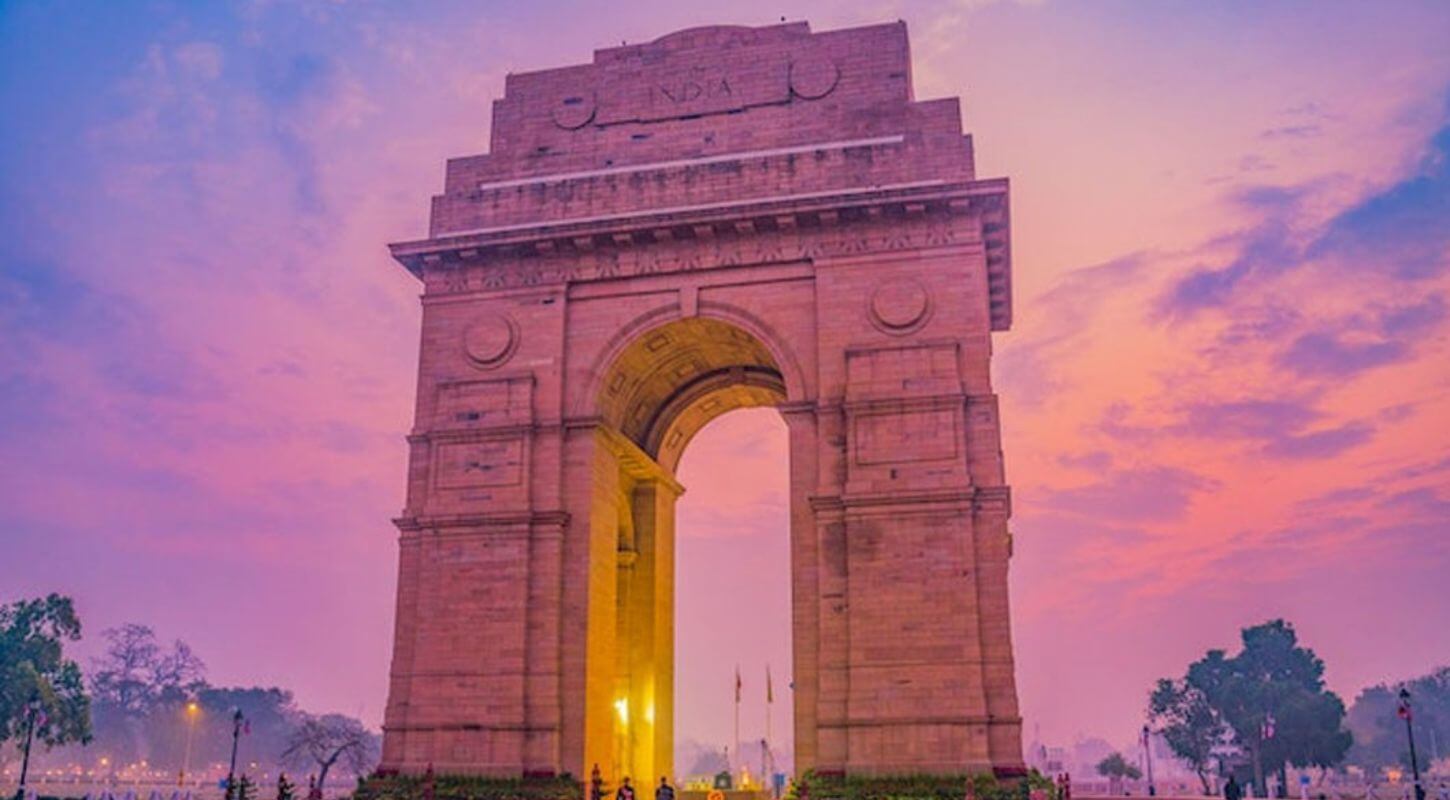
Afternoon visit the Market of Connaught place and India Gate, A war
memorial dedicated to Indian soldiers who died in World War I, India
Gate is an iconic landmark and a great place for an evening stroll.
Visit the Rashtrapati Bhavan from outside: The official residence of the
President of India, this grand building is a masterpiece of British
architecture. While you can't enter the main building, you can take a
guided tour of the Mughal Gardens (in February-March) and visit the
adjacent Rashtrapati Bhavan Museum.
Visit the Gurudwara Bangla Sahib: This prominent Sikh temple is known
for its beautiful golden dome and serves free meals to thousands of
visitors every day.
Return to hotel in the evening.
Overnight at hotel.
DAY 3: DELHI – UDAIPUR (FLIGHT)
Breakfast at hotel.
Transfer to Airport for flight to Udaipur (8 people).
Arrive Udaipur. Drop your bags at the hotel and continue your
sightseeing
Udaipur has a romance of setting unmatched in Rajasthan and arguably in
all India – snuggling beside tranquil Lake Pichola, with the purple
ridges of the Aravalli Range stretching away in every direction.
Fantastical palaces, temples, havelis (traditional, ornately decorated
residences) and countless narrow, crooked, timeless streets add the
human counterpoint to the city’s natural charms.
Arrive Udaipur and Check in at hotel.
Evening at leisure.
Overnight at hotel.
DAY 4: UDAIPUR
Breakfast at hotel.
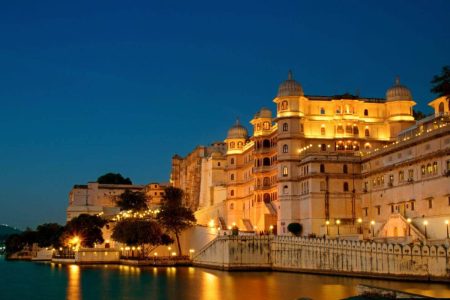
Today you're met by your guide and taken for an interesting private tour
of Udaipur, the beautiful city of lakes. Explore many of the highlights
of the city including the City Palace which was built in a flamboyant
style and considered the largest of its type in the state.
Afternoon visit the Sahelion ke Badi.
In the north of the city, about 3km from Lal Ghat, the Saheliyon-ki-Bari
was built by Sangram Singh II in 1710. This small, quaint ornamental
garden was laid out for the enjoyment of 48 women attendants who came as
part of a princess’ dowry and has beautiful, well-maintained fountains
(water shortages permitting), kiosks, marble elephants and a delightful
lotus pool.
Late Afternoon enjoy the boat cruise in the evening.
DAY 5: UDAIPUR / RANAKPUR / JODHPUR
After breakfast , visit Saheliyon ki Baari.
Continue drive to Ranakpur
The temple is said to have been built by Seth Dharna Sah (a Jain
businessman) with the aid of Rana Kumbha, who ruled Mewar in the 15th
century. Ranakpur got its name after the name of the Rajput Monarch and
likewise the temples.
The Jain Temples of Ranakpur are certainly creditable for their splendid
architecture. This temple is wholly constructed in light colored marble
and comprises a basement covering an area of 48000 sq feet. There are
more than 1400 exquisitely carved pillars that support the temple.
Arrive Jodhpur in the afternoon and contiune your city tour by exploring
Jaswant Thada - built out of intricately carved sheets of marble. These
stones are extremely thin and polished so that they emit a warm glow
when the sun's rays dance across their surface.
Within this cenotaph, there are also two more tombs. The Jaswant Thada
is a traditional cremation ground of Jodhpur rulers. The grounds also
include exquisitely carved gazebos, a beautiful multi-tiered garden, and
a small lake.
Mehrangarh Fort- is one of the largest forts in forts. It is also the
most magnificent fort in Jodhpur, infact, in the whole Rajasthan. The
fort is amongst the popular tourist places in India. It is situated on a
150 m high hill. It was founded by Rao Jodha in 1459. The Mehrangarh
Fort can be reached from the city, 5 kms below, through a circular
road.
The Mehrangarh Fort, with its beauty, is the living proof of the hard
work and skill of the Jodhpuri sculptors.
Dinner at Overnight at hotel.
DAY 6: JODHPUR / NAGAUR / BIKANER
Breakfast at hotel.
Leave for Bikaner.
Founded in the late 15th century by Rao Bika, a Rajput prince and the
city's namesake, Bikaner is known for its rich cultural heritage,
magnificent forts, and traditional Rajasthani architecture. Nestled
amidst the vast Thar Desert, the city offers a unique blend of history,
art, and the desert way of life
Enroute visit Nagaur.
Nagaur is referred to in the Mahabharata. The kingdom of Ahichhatrapur
which Arjuna is said to have conquered and subsequently offered to his
Guru Dronacharya, was perhaps some of the area of the Nagaur district.
It was the capital of Jangaldesh. The foundation of city dates back to
4th century BC. Nagas originally ruled over this place and about 7th
century onwards the Chauhans became the overlords of Nagaur and it was
included in Sapadalaksha.
Nagaur city was at the centre of Muslim invasion from Central Asia. The
Nagaur fort is of historical importance.
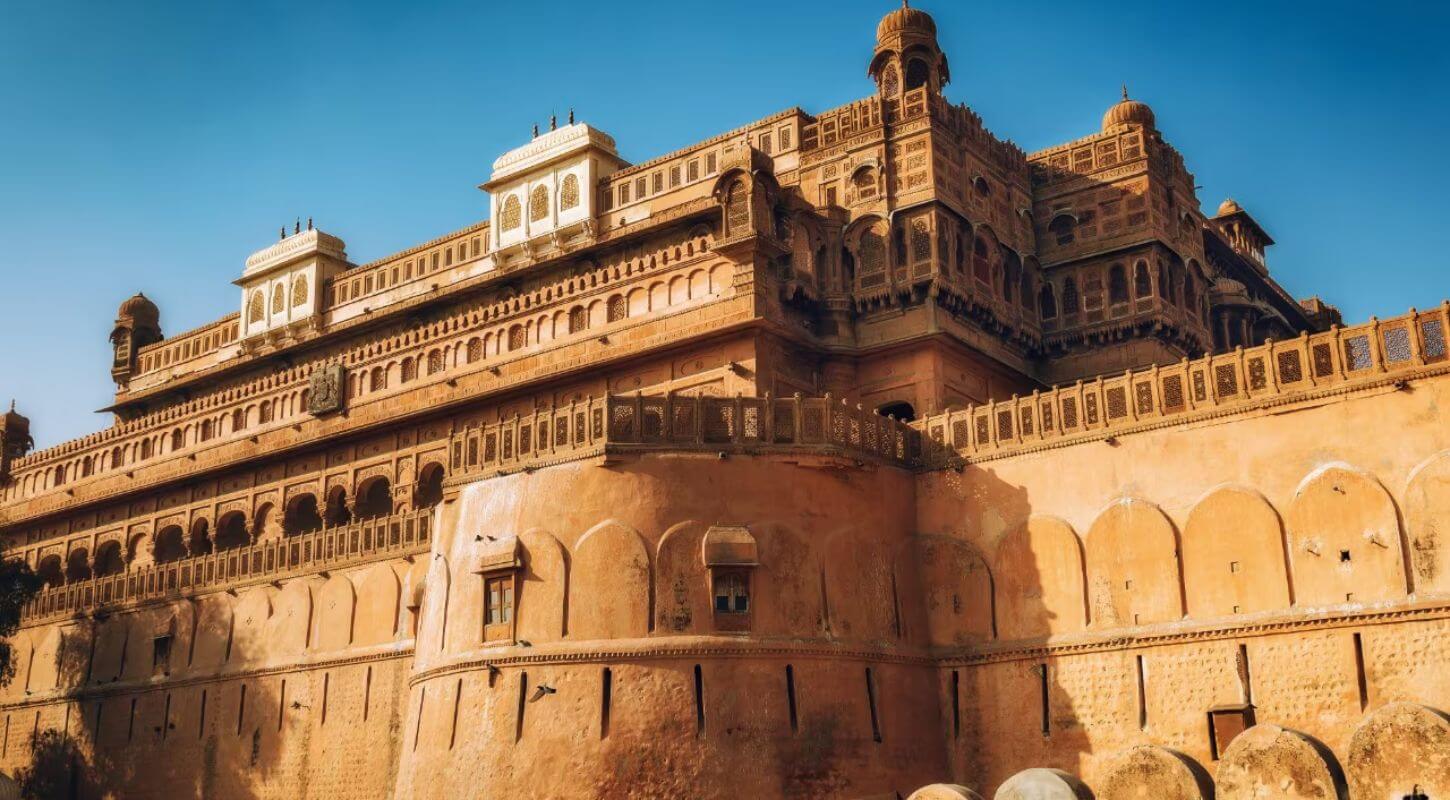
Afternoon, city tour, with Fort Junnagarth and Ganga Golden Jubilee
Museum, which displays collections of sculptures, terracotta objects,
paintings and musical instruments. The Fort Junnagarth, built in the
fifteenth century as a real eagle's nest, is equipped with 37 bastions
and a rampart of about 1000 meters long! One has to walk on a long ramp
and several monumental gates. One can see many impacts of cannonballs,
dating from many battles. The fort, which has various palaces and
temples, is a maze of corridors, stairways and courtyards, revealing
beautiful facades, carved balconies and windows.
After visiting the fort, you will visit the local sweet shop which shows
how the local sweets are prepared in Bikaner.
Overnight at hotel.
DAY 7: BIKANER / NAWALGARH / JAIPUR
Breakfast at hotel.
Leave for Jaipur.
Enroute visit Navalgarh.
Established in the 18th century by Nawal Singh, a prominent Rajput
warrior and founder of the town, Nawalgarh is renowned for its
architectural splendor, vibrant frescoes, and rich cultural heritage. As
part of the Shekhawati region, Nawalgarh is often referred to as an
open-air art gallery due to the plethora of beautifully adorned havelis
(mansions) that grace its streets.
Afternoon continue drive to Jaipur.
Rajasthan's beautiful Pink City Jaipur, was the stronghold of a clan of
rulers whose three hill forts and series of palaces in the city are
important attractions. Known as the Pink City because of the colour of
the stone used exclusively in the walled city, Jaipur's bazaars sell
embroidered leather shoes, blue pottery, tie and dye scarves and other
exotic wares. Western Rajasthan itself forms a convenient circuit, in
the heart of the Thar desert which has shaped its history, lifestyles
and architecture.
Overnight at the hotel.
DAY 8: JAIPUR
Breakfast at hotel.
Morning visit the grand Amber fort - The old capital of the Kachhwahas
stands atop a range of craggy hills. The fort is remarkable as much for
the majestic grandeur of its surroundings as for its sturdy battlements
and beautiful palaces. It is a fine blend of Hindu and Muslim
architecture. The solemn dignity of it red sandstone and white marble
pavilions, when reflected in the lake at the foot hill, is a sight to
behold.
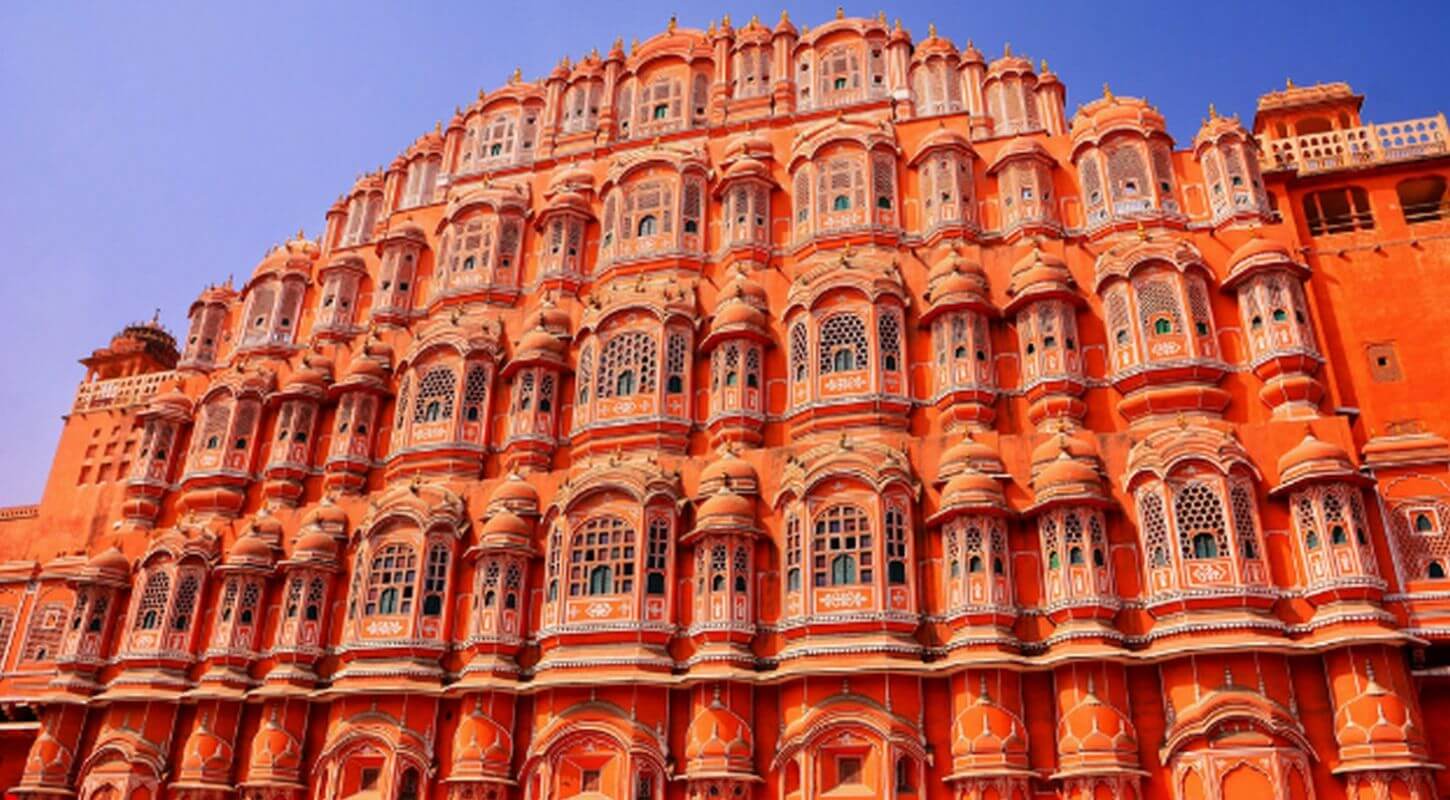
Visit Hawa Mahal (OUTSIDE) - built in 1799, by Maharaja Sawai Pratap
Singh, is the most recognizable monument of Jaipur. The 5 storied
stunning semi-octagonal monument having 152 windows with over hanging
latticed balconies is a fine piece of Rajput architecture. Originally
designed for the royal ladies to watch and enjoy the processions and
other activities, on the street below.
City Palace- situated in the heart of the old City, it occupies about
one seventh of the old city area. The palace is a blend of Rajput and
Mughal architecture, it houses a Seven storeyed Chandra Mahal in the
centre, which affords a fine view of the gardens and the city.
Diwan-E-Am (Hall of public audience) has intricate decorations and
collection of manuscripts, Diwan-E-Khas (Hall of private audience) has a
marble pawed gallery Mubarak Mahal has a rich collection of costumes and
textiles. There is a Clock Tower near Mubarak Mahal. Sileh Khana has a
collection of armory and weapons.
Observatory - built in 18th century by Maharaja Sawai Jai Singh II, the
huge masonary instruments were used to study the movement of
constellations and stars in the sky. Enormous sun-dial still provide
accurate time, which are subject to daily corrections.
Continued with a Rickshaw ride in the old city of Jaipur.
Overnight at hotel.
DAY 9: JAIPUR / FATEHPUR SIKRI / AGRA
Breakfast at Hotel.
Morning leave for Agra.
En route visit the Old city of Fatehpur Sikri.
The historical city was constructed by Mughal emperor Akbar beginning in
1570 and served as the empire's capital from 1571 until 1585, when it
was abandoned for reasons that remain unclear. The surviving palace and
mosque are a tourist attraction and a UNESCO World Heritage Site.
The palace complex is lavishly ornamented and displays the riches of
Amer. Sheesh Mahal chamber of Mirrors. Diwan-e-Am or the Hall of Public
Audience is a beautifully proportioned hall open on three sides and
stands on two rows of ornamented pillars. Diwan e-Khas or the Hall of
Private Audience has delicate mosaic work in glass. Sukh mandir is
guarded by sandalwood doors inlaid with ivory. Throughout the massive
fort finely carved lattice windows, exquisitely painted doorways, halls
and finely sculptured pillars crave for attention.
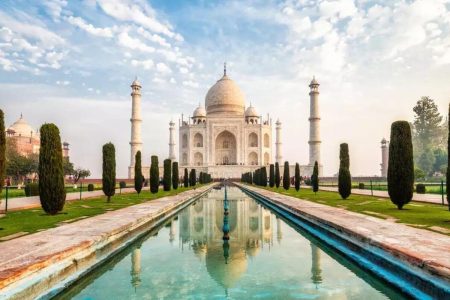
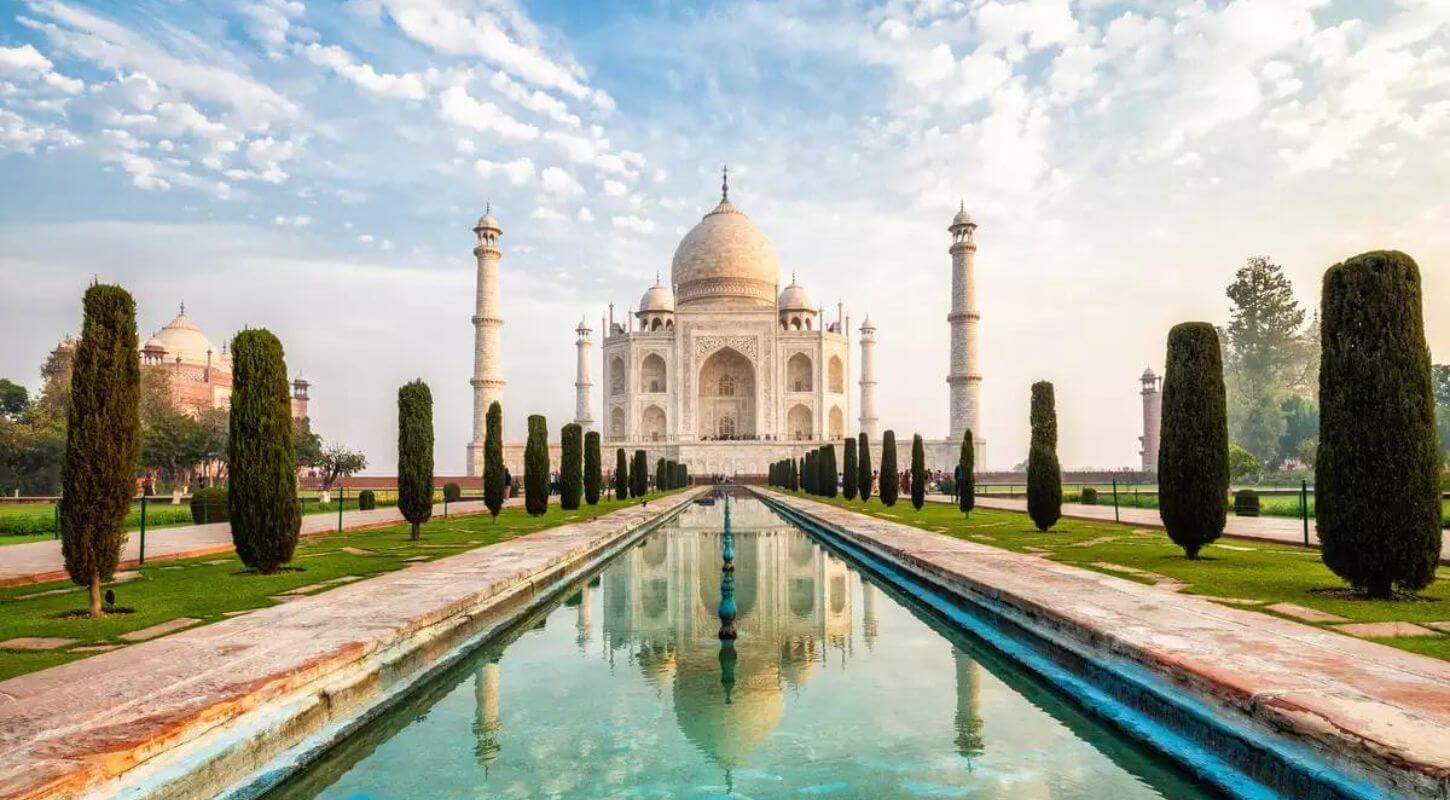
Evening visit the Taj Mahal (Closed on Friday). The Taj Mahal is a
mausoleum located in Agra, India, built by Mughal Emperor Shah Jahan in
memory of his favorite wife, Mumtaz Mahal. The Taj Mahal (also "the
Taj") is considered the finest example of Mughal architecture, a style
that combines elements from Persian, Ottoman, Indian, and Islamic
architectural styles. In 1983, the Taj Mahal became a UNESCO World
Heritage Site and was cited as "the jewel of Muslim art in India and one
of the universally admired masterpieces of the world's heritage."
.
Overnight at hotel.
DAY 10: AGRA – JHANSI (TRAIN) / ORCHHA
Early morning transfer to railway station for train to Jhansi.
Upon arrival drive to Orchha
Lunch at Orchha
Afternoon, visit Orchha.
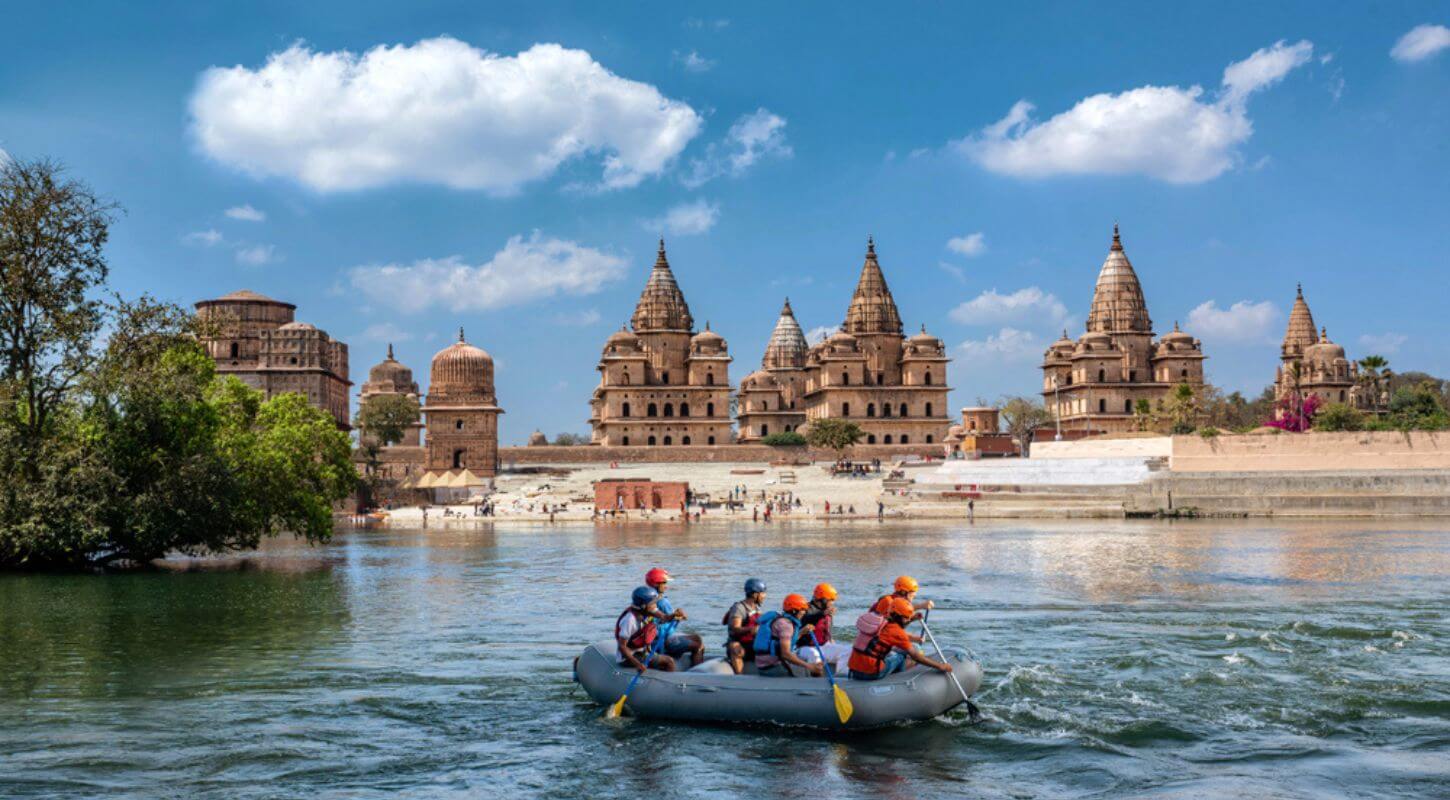
On a seasonal island on the bank of the Betwa River, which has been
surrounded by a battlement wall, stands a huge palace-fort. The fort
consists of several connected buildings erected at different times, the
most noteworthy of which are the Raja Mahal and the Jahangir Mahal.
The Ram Raja Temple is built on a square base and has an almost entirely
plain exterior, relieved by projecting windows and a line of delicate
domes along the summit. The Jahangir Mahal is built on a rectangular
base and is relieved by a circular tower at each corner surmounted by a
dome, while two lines of graceful balconies supported on brackets mark
the central storeys. The roof is crowned by eight large fluted domes,
with smaller domes between them, connected by an ornamental balustrade.
The Jahangir Mahal is considered to be a singularly beautiful specimen
of Mughal architecture.[7] Chaturbhuj Temple is an old temple from the
9th century.
Numerous cenotaphs or chhatris dot the vicinity of the fort and the
Betwa river. Elsewhere about the town there is an unusual variety of
temples and tombs, including the Chaturbhuj temple, which is built on a
vast platform of stone. The more unguarded and neglected of these
buildings are popular hangouts for tropical bees, wasps, and other such
excitable stingy creatures.
Overnight at hotel.
DAY 11: ORCHHA / KHAJURAHO
Breakfast at hotel.
Leave for Khajuraho.
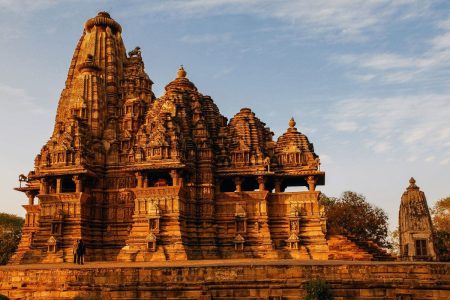
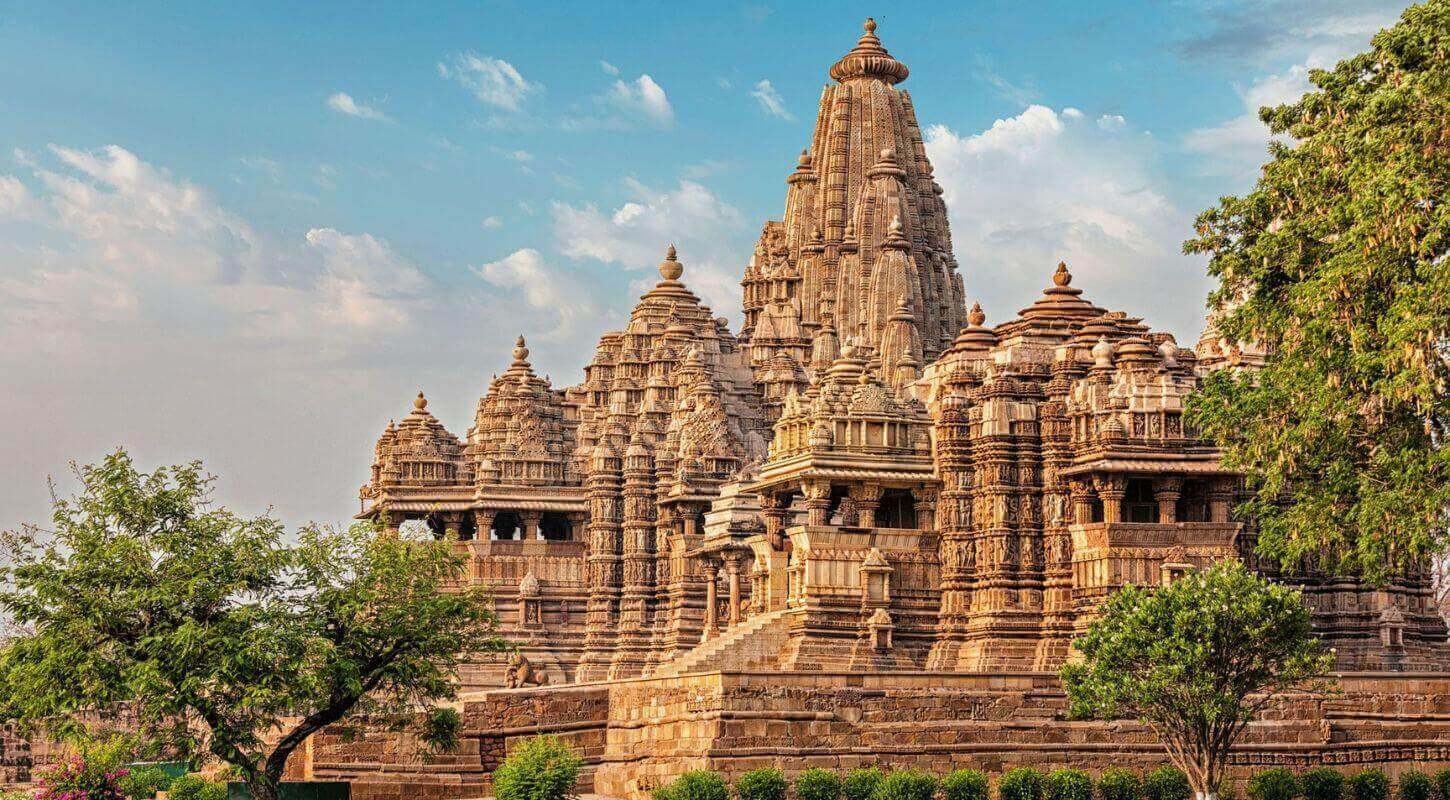
Khajuraho is a UNESCO World Heritage Site located in the Chhatarpur
district of Madhya Pradesh, India. It is renowned for its group of
stunning temples, which are celebrated for their intricate and explicit
erotic carvings along with exquisite architecture. The Khajuraho Group
of Monuments is considered one of the finest examples of Indian temple
artistry from the medieval period, showcasing the rich cultural and
artistic heritage of the Chandela dynasty.
Afternoon, visit the Khajuraho temples.
The temples of Khajuraho were built between 950 to 1050 A.D. during the
Chandela dynasty of Central India (These rulers claimed descent from the
moon, hence the name Chand-ela). After the decline of the Chandela
dynasty in 13th century, the temples were left under the cover of dense
date palm trees for many years, which gave the city of Khajuraho its
name, Khajur in Hindi means a date. In the ancient times it was known as
Vatsa.
Overnight at hotel.
DAY 12: KHAJURAHO / VARANASI (9W 724 – 1210/1320 Hrs)
Breakfast at hotel
Transfer to the airport for flight to Varanasi.
Arrive Varanasi & transfer to hotel and Check-in.
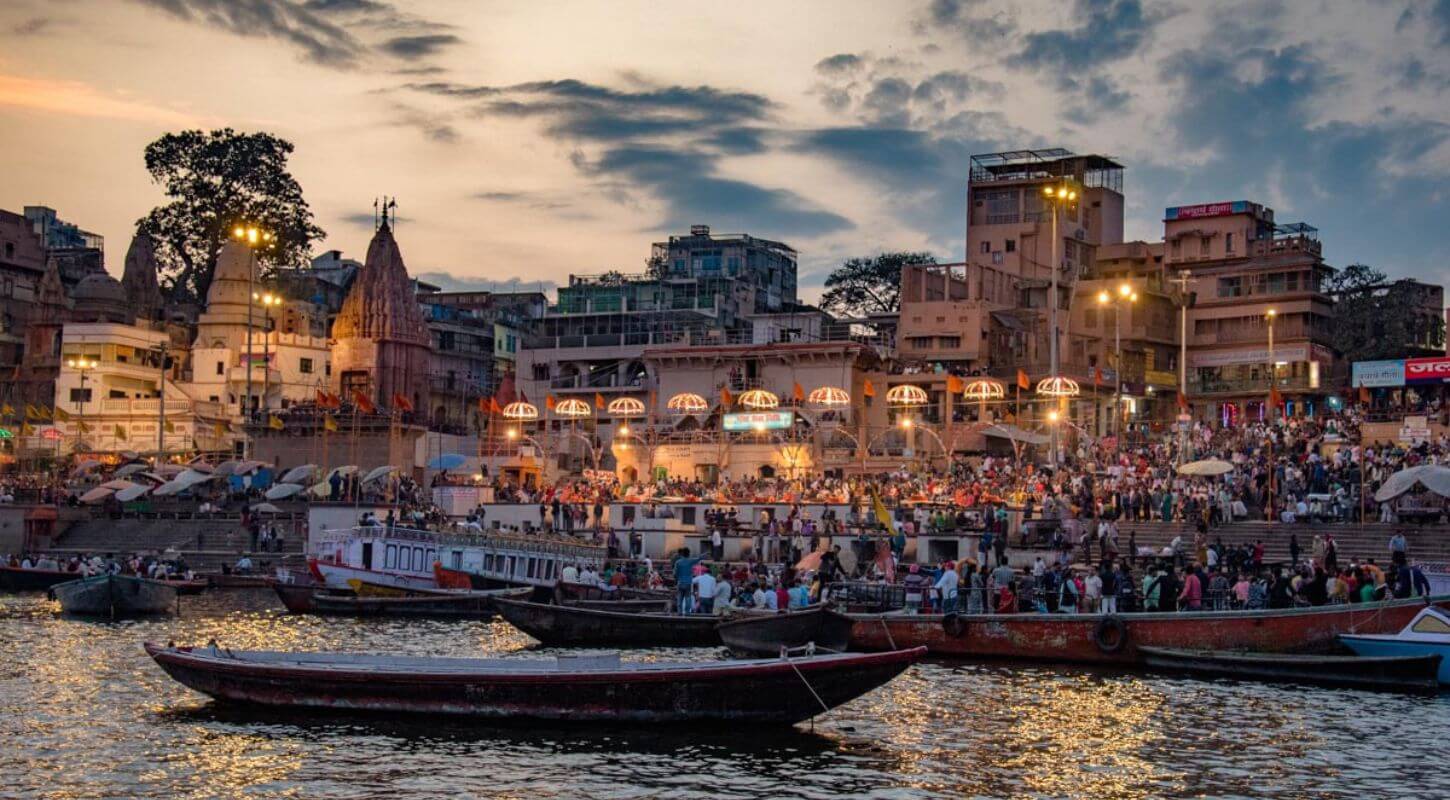
Evening, visit the Ghats with boat ride and see evening Aarti.
Varanasi or Kashi is older than traditions. Varanasi presents a unique
combination of physical, metaphysical and supernatural elements.
According to the Hindu mythology, Varanasi liberates soul from human
body to the ultimate. It is the Ganga Ghats of Varanasi that complement
the concept of divinity. Ghats of Ganga are perhaps the holiest spots of
Varanasi. The Ganga Ghats at Varanasi are full of pilgrims who flock to
the place to take a dip in the holy Ganges, which is believed to absolve
one from all sins.
There are number of temples on the bank of the Ganga river in Varanasi.
It is believed that people are cleansed physically, mentally and
spiritually at Ganga Ghats. It is at the Ganga Ghats where we see life
and death together. For thousands of years people have been thronging
these Ghats to offer their morning prayers to the rising sun. There are
more than 100 ghats along side Ganga in Varanasi. Some of the prominent
and popular Ghats at Varanasi are the Dasaswamedh Ghat, Manikarnika
Ghat, Harischandra Ghat, Kabir Ghat and Assi Ghat.
Overnight at hotel
DAY 13: VARANASI / DELHI (9W 724 – 1440/1600 Hrs) / PARIS
Early morning baot ride at the river Ganges.
Breakfast at hotel.
Morning visit the old city of Varanasi and the Bharat Mata temple
Afterwards, visit Sarnath.
Sarnath, about 10 km from the holy city of Varanasi, is the place where
Buddha chose to deliver his first sermon. The celebrated Mantra,
'Buddham Sharanam Gachhami', owes its origin to Sarnath. On the day
before his death Buddha included Sarnath along with Lumbini, Bodh Gaya
and Kushinagar as the four places he thought to be sacred to his
followers. It makes Sarnath one of the most venerated Buddhist places.
Besides Buddhism, Sarnath is also connected with Jainism.
Transfer to airport for flight to Delhi.
Later transfer to Airport for flight to onward destination.
Connect with the Raag Voyages Team to craft your personalized journey
through India