DAY 1: DELHI
Arrive at Indra Gandhi International Airport late at Night.
Our representative will meet you at the Airport and assist you to
the Hotel.
Upon arrival check in at the Hotel.
Overnight stay at Hotel
DAY 2: DELHI - MANDAWA
After breakfast at the hotel, leave for sightseeing of Old
Delhi.
Old Delhi is approximately shaped like a quarter circle, with the
Gouhar Mahal as the focal point. The old city was surrounded by a
wall enclosing about 1500 acres, with several gates. The Masjid-i
Jahān-Numā commonly known as the Jama Masjid of Delhi, is the
principal mosque of Old Delhi in India. Commissioned by the Mughal
Emperor Shah Jahan, builder of the Taj Mahal, and completed in the
year 1656 AD, it is the largest and best-known mosque in
India.
Chandni Chowk is the major street in the walled city of Old Delhi,
which was originally called Shah Jahanabad. The walled city which
includes the Lal Qilla Red Fort of Delhi was established in 1650
AD, by the Mughal Emperor, Shah Jahan and designed by his daughter
Jahanara Begum Sahib, who also made significant contributions in
the landscaping of her father's new capital of
Shahjahanabad.
Gurdwara Bangla Sahib is the most prominent Sikh gurdwara, or Sikh
house of worship, in Delhi. It is instantly recognizable by its
stunning golden dome and tall flagpole.
Afternoon, leave for Shekhawati.
Arrive, Shekhawati in the evening.
Shekhawati is a semi-arid region located in the northeastern part
of the Indian state of Rajasthan. This historical and cultural
region is renowned for its intricately painted havelis (mansions)
that display a vibrant array of frescoes and murals, making it an
open-air art gallery of sorts. The word "Shekhawati" literally
means the "garden of Shekha," referring to the Rajput ruler Rao
Shekha, who is credited with establishing the Shekhawati
region.
Overnight at Hotel.
DAY 3: MANDAWA – NAWALGARH – DUNDLODH - MANDAWA
Breakfast at hotel.
Morning visit the village of Mandawa. Mandawa was a trading
outpost for the ancient caravan routes that stopped here from
China and the Middle East. This town has been referred to as the
"open art gallery" of Rajasthan because the entire Shekhawati
region and not just Mandawa is dotted with fascinating
mansions(havelis) that have lavishly painted walls.
Afternoon visit Nawalgarh.
Established in the 18th century by Nawal Singh, a prominent Rajput
warrior and founder of the town, Nawalgarh is renowned for its
architectural splendor, vibrant frescoes, and rich cultural
heritage. As part of the Shekhawati region, Nawalgarh is often
referred to as an open-air art gallery due to the plethora of
beautifully adorned havelis (mansions) that grace its streets.
Continue towards Dundlodh and visit the ancient haveli’s, which
now have been restored into museums.
Nestled within the arid landscapes of northern Rajasthan, Dundlod
is renowned for its well-preserved heritage, featuring majestic
havelis, historic forts, and a distinctive Rajasthani charm. Like
many other towns in Shekhawati, Dundlod bears witness to the
grandeur of Rajput and Marwari architecture, making it a
fascinating destination for history enthusiasts and culture
seekers.
Return to Mandawa in the evening.
Overnight stay at the hotel.
DAY 4: MANDAWA – FATEHPUR – BIKANER
After breakfast at hotel leave for Bikaner via Fatehpur.
Visit Nadine Le Prince - A beautiful haveli was purchased by
French artist Nadine Le Prince. It was built in 1802 by a rich
family of traders, the Deora, who were also officers at the court
of the local Maharaja. Since 1999, Nadine Le Prince has entirely
restored the palace and all the frescoes. She is also doing much
to preserve and restore the heritage of havelis throughout
Shekhawati, working with other associations to give the havelis a
second life.
Continue towards Bikaner.
Arrive Bikaner in the evening.
Founded in the late 15th century by Rao Bika, a Rajput prince and
the city's namesake, Bikaner is known for its rich cultural
heritage, magnificent forts, and traditional Rajasthani
architecture. Nestled amidst the vast Thar Desert, the city offers
a unique blend of history, art, and the desert way of life
Evening free to relax.
Overnight at hotel.
DAY 5: BIKANER – JAISALMER
Breakfast the Hotel
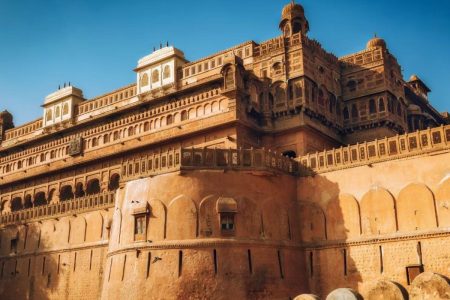
Morning, city tour, with Fort Junnagarth and Ganga Golden Jubilee
Museum, which displays collections of sculptures, terracotta
objects, paintings and musical instruments. The Fort Junnagarth,
built in the fifteenth century as a real eagle's nest, is equipped
with 37 bastions and a rampart of about 1000 meters long! One has
to walk on a long ramp and several monumental gates. One can see
many impacts of cannonballs, dating from many battles. The fort,
which has various palaces and temples, is a maze of corridors,
stairways and courtyards, revealing beautiful facades, carved
balconies and windows.
After visiting the fort, you will visit the local sweet shop which
shows how the local sweets are prepared in Bikaner.
Drive towards Jaisalmer. Upon arrival check into your hotel and
relax.
Jaisalmer, often referred to as the "Golden City," is a
mesmerizing destination located in the heart of the Thar Desert.
Renowned for its breathtaking architecture, magnificent sandstone
structures, and the enchanting Thar Desert setting, Jaisalmer is a
jewel in the crown of Rajasthan's cultural and historical
heritage.
Rest of the day free to explore the market of Jaisalmer.
Overnight will be at the hotel.
DAY 6: JAISALMER
Morning after breakfast start your city tour of Jaisalmer:
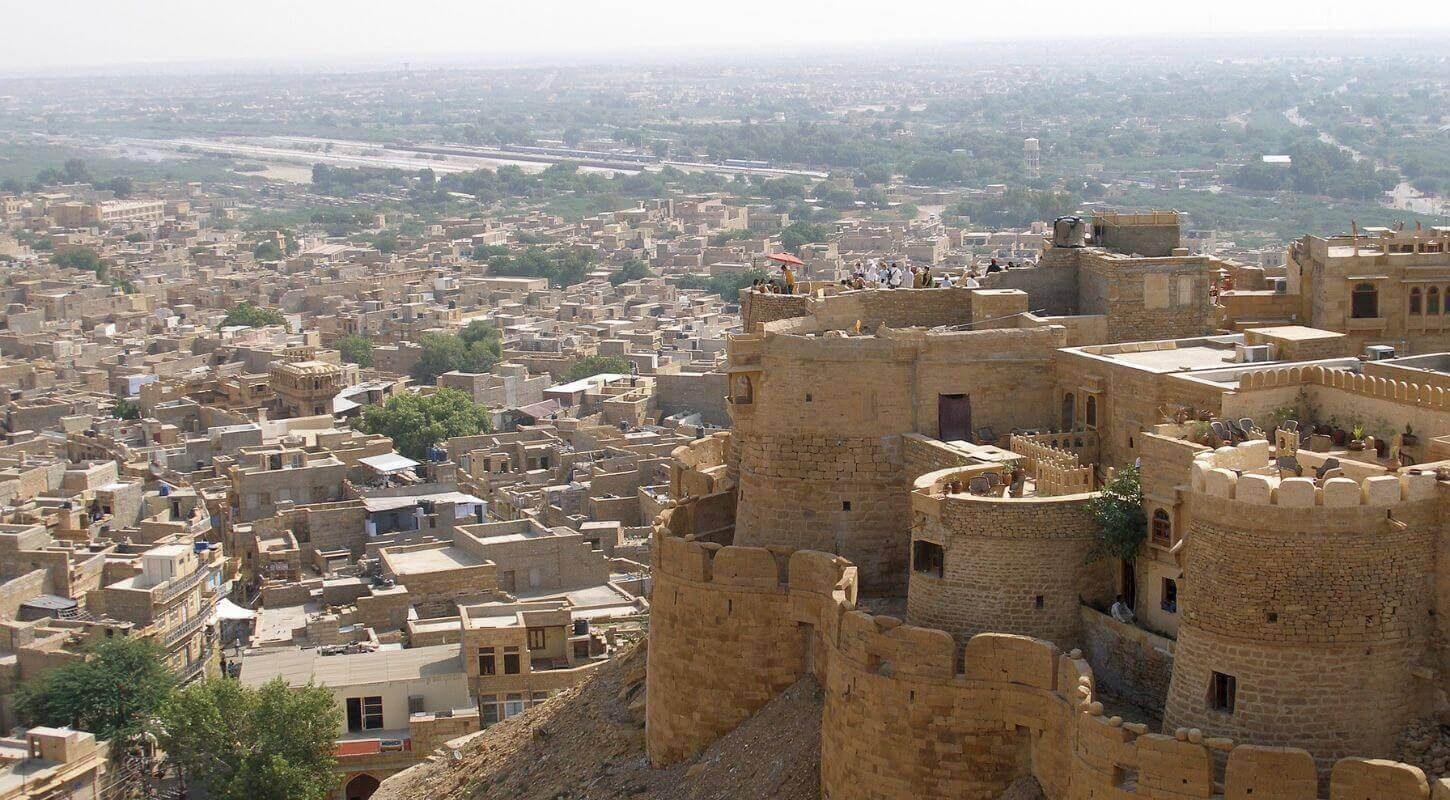
The Jaisalmer Fort - situated on Trikuta Hill and had been the
scene of many battles. Its massive sandstone walls are a tawny
lion colour during the day, turning to a magical honey-gold as the
sun sets.
This is a living fort and about a quarter of city's population
still live inside the fort. The main attractions inside the fort
are: Raj Mahal (Royal palace), Jain temples and the Laxminath
temple. of the Jain temples inside the Sonar Kila. The fort
comprises a population of 40,000 people living inside it. You will
find shops, hotels, restaurants, cafes, bars etc. all inside the
Sonar Kila.
Visit the citadel’s palace which consist huge collection of robes
and artifacts from the royal family of Jaisalmer. Patwaon ki
haveli a five storey mansion with carved pillars used by the royal
ladies to view the external world.
Overnight at the hotel.
DAY 7: JAISALMER - JODHPUR
Breakfast at Hotel. Leave for Jodhpur.
Jodhpur, often referred to as the "Blue City" for the distinctive
blue-painted houses in its old quarter. Nestled at the edge of the
Thar Desert, Jodhpur is renowned for its imposing forts, palaces,
and vibrant bazaars, making it a captivating destination that
beautifully encapsulates the regal charm of Rajasthan
Arrive Jodhpur in the afternoon and continue your city tour by
exploring Jaswant Thada - built out of intricately carved sheets
of marble. These stones are extremely thin and polished so that
they emit a warm glow when the sun's rays dance across their
surface.
Within this cenotaph, there are also two more tombs. The Jaswant
Thada is a traditional cremation ground of Jodhpur rulers. The
grounds also include exquisitely carved gazebos, a beautiful
multi-tiered garden, and a small lake.
Mehrangarh Fort- is one of the largest forts in forts. It is also
the most magnificent fort in Jodhpur, infact, in the whole
Rajasthan. The fort is amongst the popular tourist places in
India. It is situated on a 150 m high hill. It was founded by Rao
Jodha in 1459. The Mehrangarh Fort can be reached from the city, 5
kms below, through a circular road.
The Mehrangarh Fort, with its beauty, is the living proof of the
hard work and skill of the Jodhpuri sculptors.
Overnight at Hotel.
DAY 8: JODHPUR – RANAKPUR - UDAIPUR
Breakfast at hotel. Leave for Udaipur.
En route visiting the Jain Temple of RANAKPUR
The temple is said to have been built by Seth Dharna Sah (a Jain
businessman) with the aid of Rana Kumbha, who ruled Mewar in the
15th century. Ranakpur got its name after the name of the Rajput
Monarch and likewise the temples.
The Jain Temples of Ranakpur are certainly creditable for their
splendid architecture. This temple is wholly constructed in light
colored marble and comprises a basement covering an area of 48000
sq feet. There are more than 1400 exquisitely carved pillars that
support the temple.
Continue your drive towards Udaipur.
Udaipur, often referred to as the "City of Lakes" or the "Venice
of the East," is a picturesque city nestled in the western Indian
state of Rajasthan. Renowned for its enchanting lakes, regal
palaces, and vibrant cultural heritage, Udaipur is a destination
that captivates visitors with its romantic charm and timeless
elegance.
Upon arrival check into your hotel and relax.
Overnight at the hotel.
DAY 9: UDAIPUR
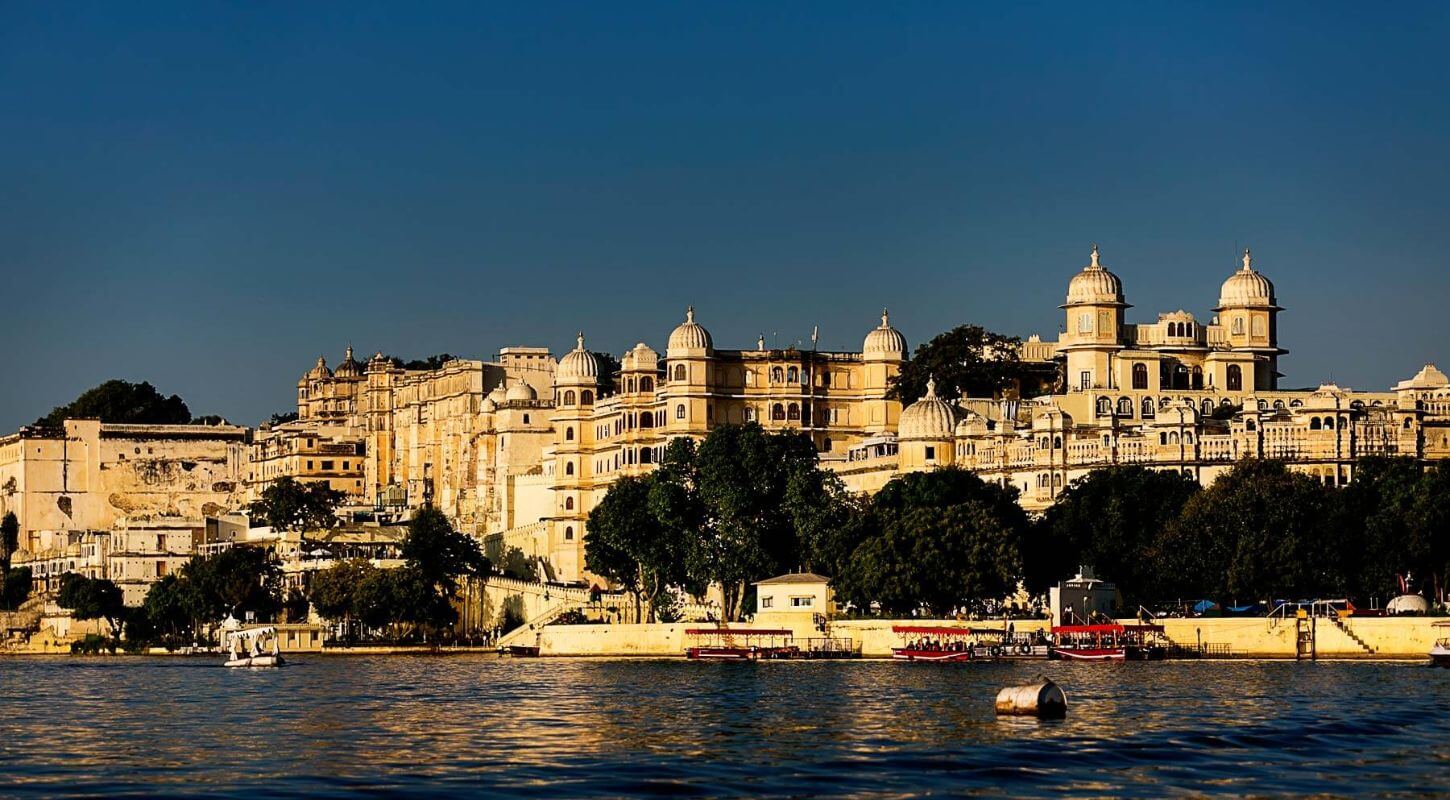
After breakfast, you would move out to explore the lake city. The
Lake Palace on Jag Niwas Island in the middle of Pichola Lakes is
the finest example of its architectural and cultural explosion.
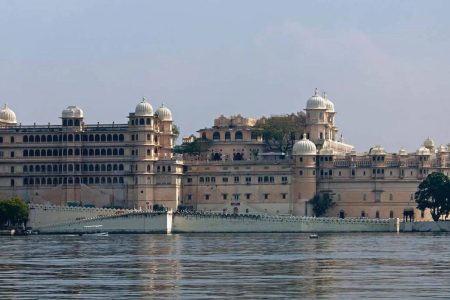
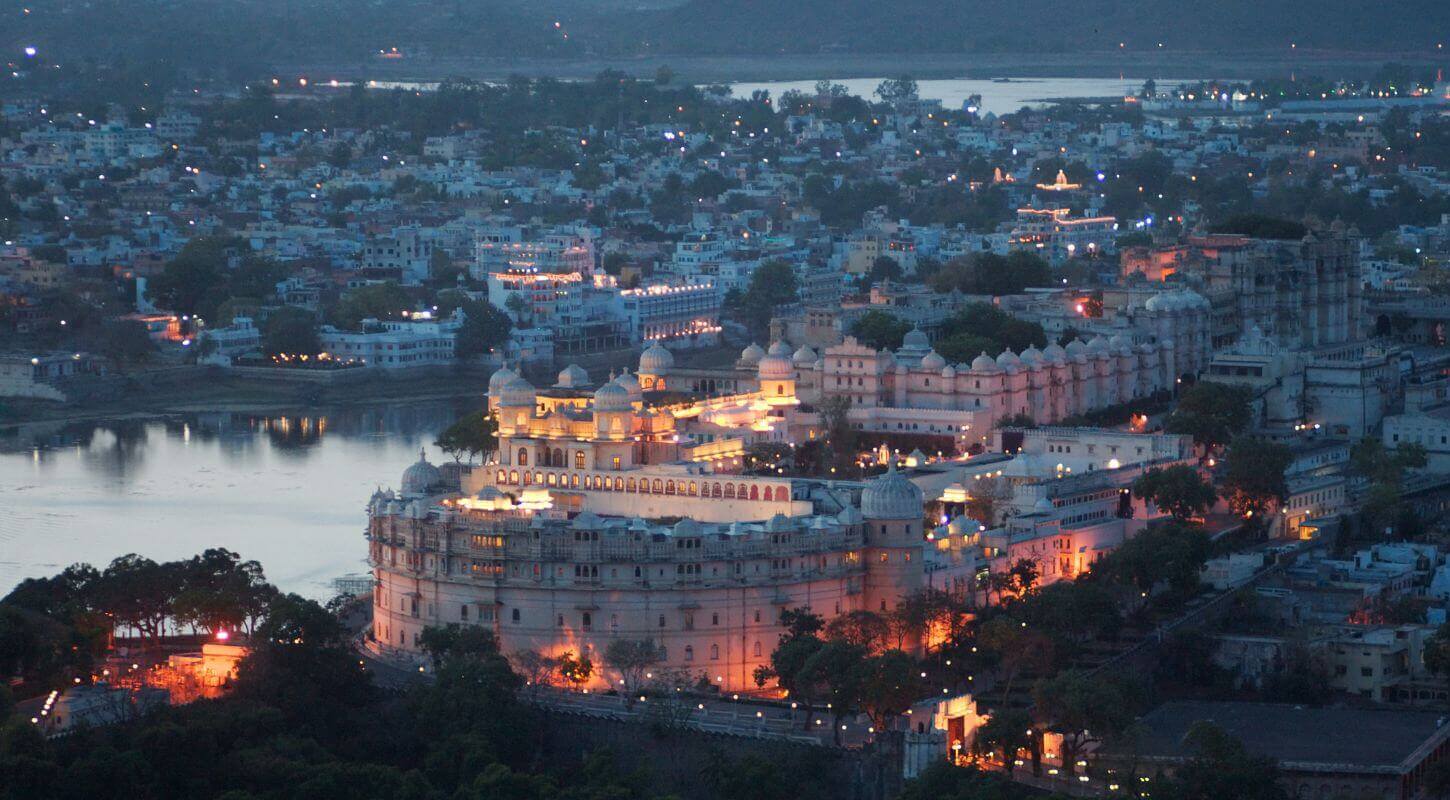
Visit City Palace - A majestic architectural marvel towering over
the lake on a hill surrounded by crenellated walls, it is a
conglomeration of courtyards, pavilions, terraces, corridors,
rooms and hanging gardens. The main entrance is through the triple
arched gate, the "Tripolia" with eight marble porticos. The
maharanas were weighed under the gate in gold, the equivalent
amount of which was distributed among the populace.,
Visit Jagdish temple - Built by Maharana Jagat Singh I in 1651 the
temple enshrines a black stone image of Lard Vishnu. There is a
brass image of Garuda the Lord bird carrier. The exterior and the
plinth are covered with base relief of alligators; elephants,
horsemen and celestial musicians rise in tiers. Chanting, bells
and music can be heard throughout the day. It is the largest and
most splendid temple of Udaipur.
Post lunch free to explore the local markets.
Evening boat ride at lake pichola.
Overnight stay at the hotel.
DAY 10: UDAIPUR - BUNDI
Breakfast at hotel.
Drive to Bundi. Check into your hotel and later explore this city
yet away from the tourist flow.
Bundi is a charming and relatively undiscovered town in the
southern part of the Indian state of Rajasthan. Nestled in the
Aravalli Range, Bundi is known for its well-preserved medieval
architecture, historical forts, and vibrant step wells. The town
exudes a quaint, old-world charm and offers a peaceful retreat
away from the bustling tourist circuits.
Visit the The Taragarh Fort, or 'Star Fort' is the most impressive
of the city's structures. It was constructed in AD 1354 upon the
top of steep hillside overlooking the city. The largest of its
battlements is the 16th century bastion known as the Bhim Burj, on
which was once mounted a particularly large cannon called Garbh
Gunjam, or 'Thunder from the Womb'. The fort is a popular tourist
viewpoint of the city below. The fort contains three tanks which
never dry up. The technique with which they were built has been
long since lost but the tanks survive as a testament to the
advanced methods of construction and engineering in medieval
India.
The Bundi Palace is situated on the hillside adjacent to the
Taragarh Fort and is notable for its lavish traditional murals and
frescoes.
Stroll through the colorful bazaars of the Old Town
Overnight will be at the hotel.
DAY 11: BUNDI - JAIPUR
Breakfast will be at the hotel.
Morning leave for Jaipur. Arrive Jaipur in the Afternoon.
Rajasthan's beautiful Pink City Jaipur, was the stronghold of a
clan of rulers whose three hill forts and series of palaces in the
city are important attractions. Known as the Pink City because of
the colour of the stone used exclusively in the walled city,
Jaipur's bazaars sell embroidered leather shoes, blue pottery, tie
and dye scarves and other exotic wares. Western Rajasthan itself
forms a convenient circuit, in the heart of the Thar desert which
has shaped its history, lifestyles and architecture.
Afternoon walk around in the old city and bazaar of Jaipur.
Evening you will be entertained with a Bollywood movie at one of
the heritage cinema’s called Raj Mandir.
Overnight at hotel.
DAY 12: JAIPUR
Breakfast at hotel.
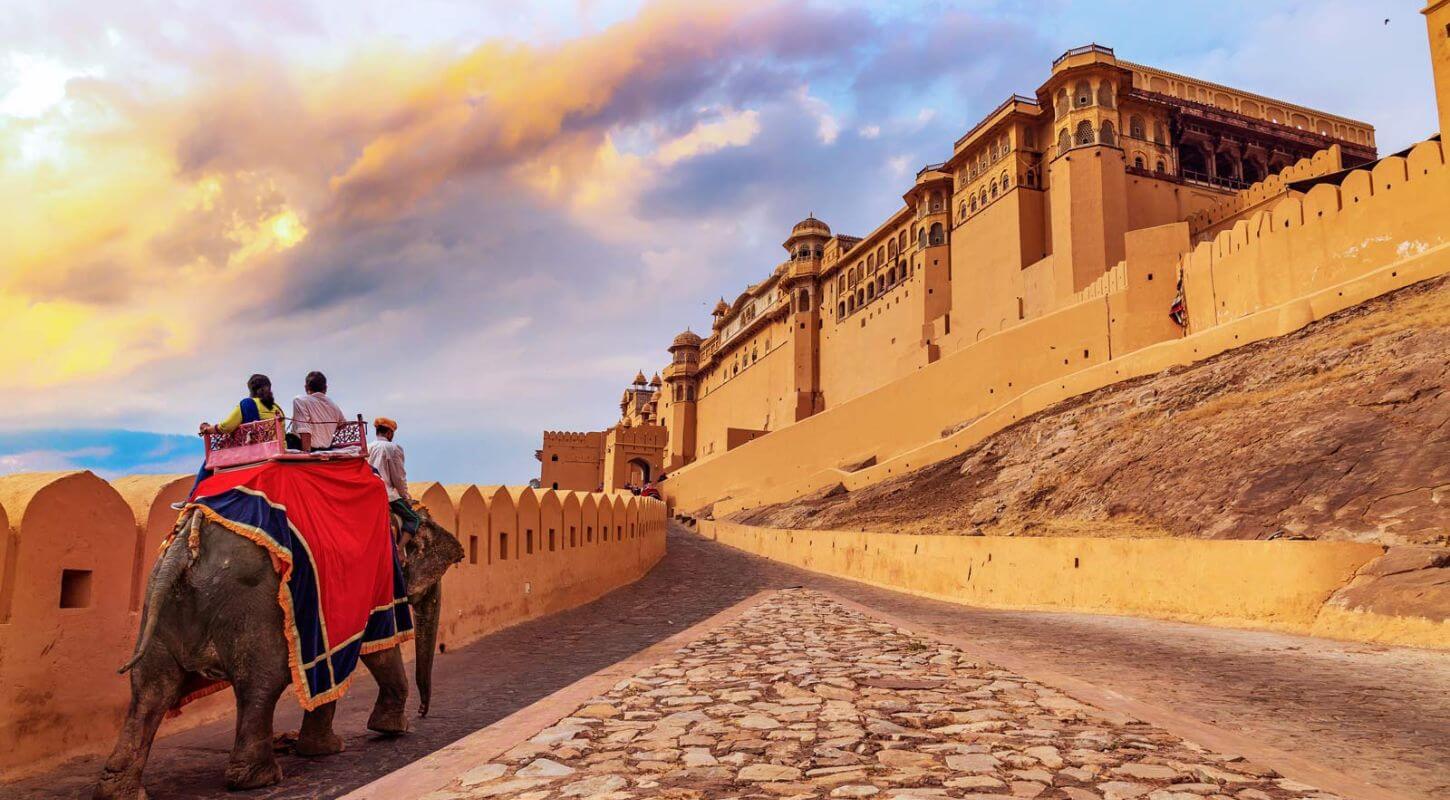
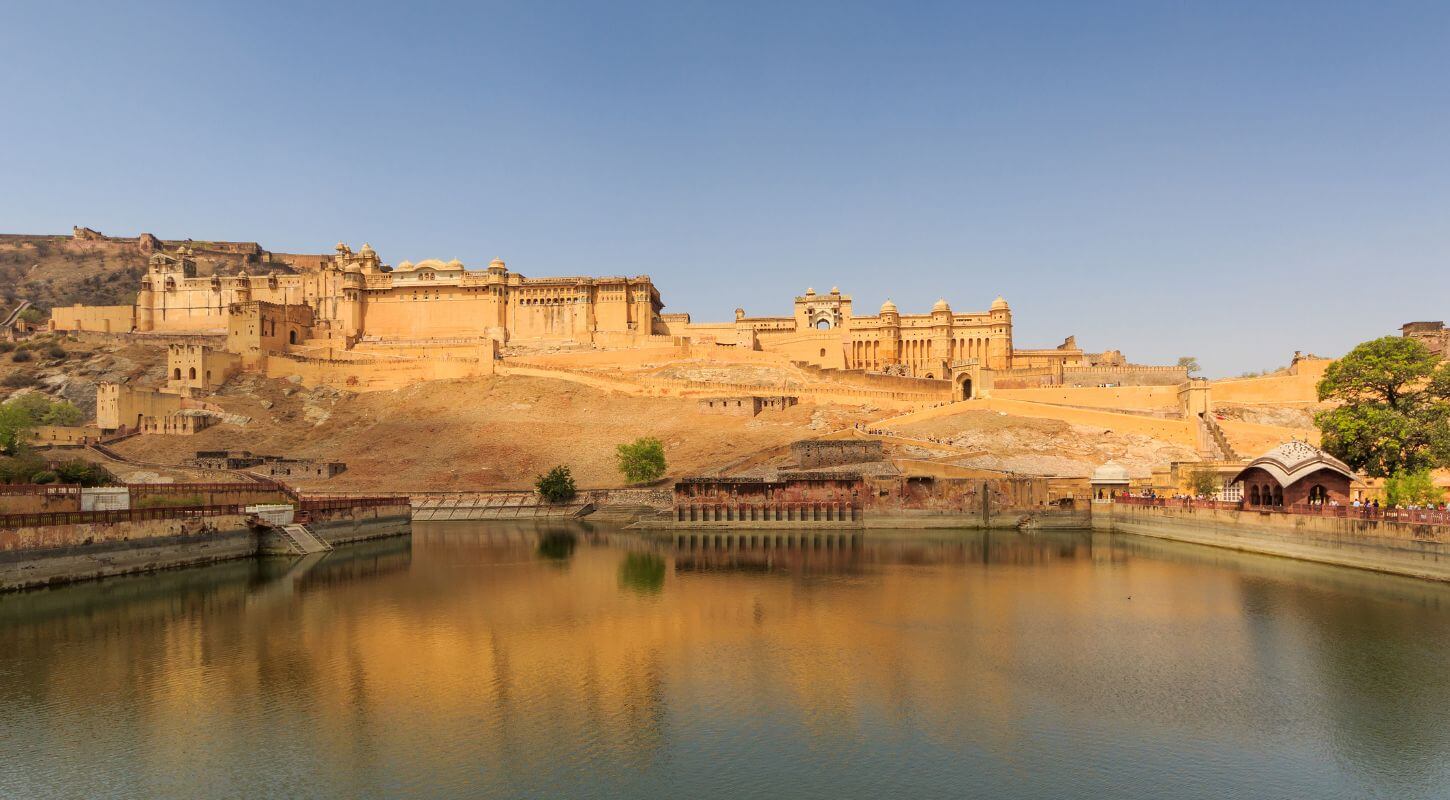
Morning visit the grand Amber fort - The old capital of the
Kachhwahas stands atop a range of craggy hills. The fort is
remarkable as much for the majestic grandeur of its surroundings
as for its sturdy battlements and beautiful palaces. It is a fine
blend of Hindu and Muslim architecture. The solemn dignity of it
red sandstone and white marble pavilions, when reflected in the
lake at the foot hill, is a sight to behold.
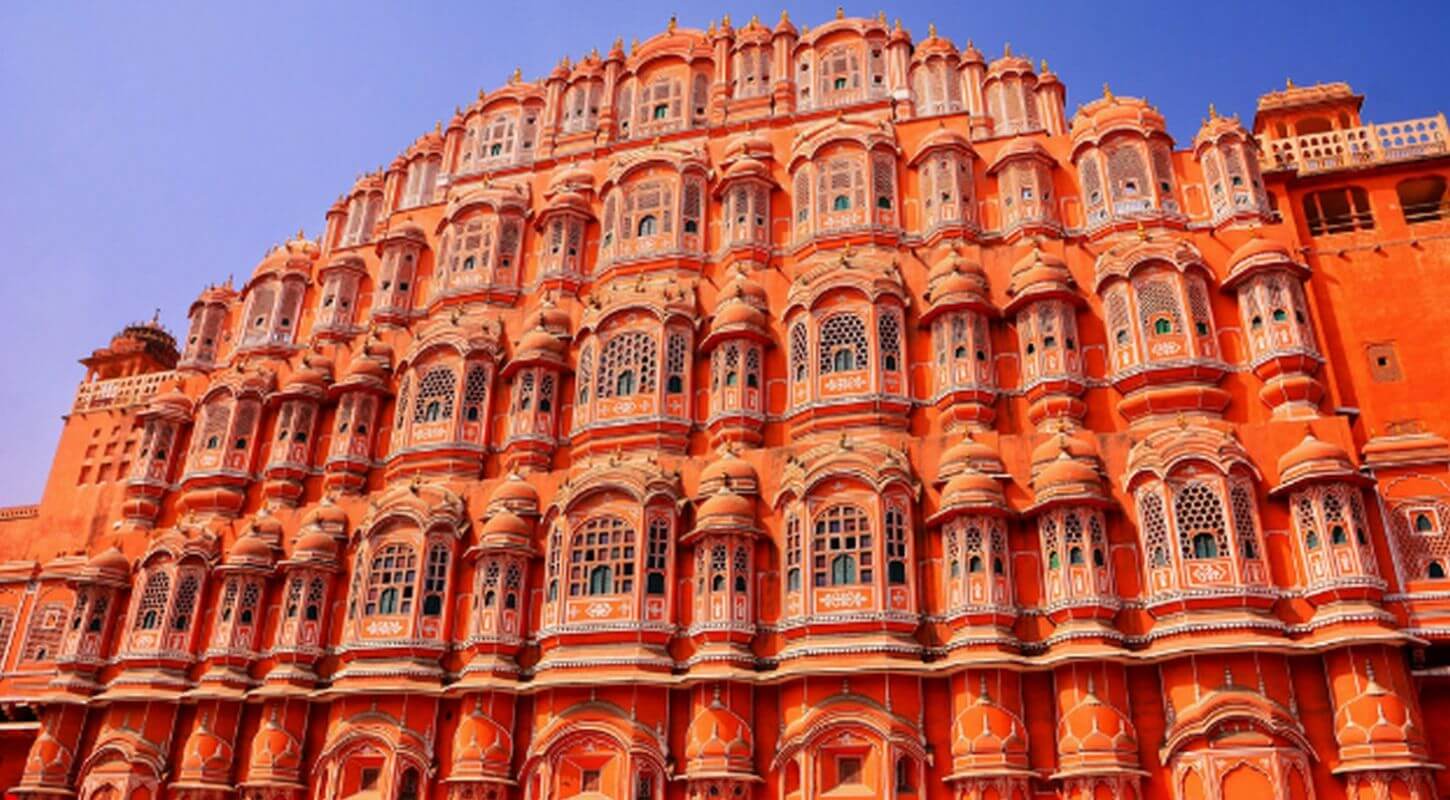
Visit Hawa Mahal (OUTSIDE) - built in 1799, by Maharaja Sawai
Pratap Singh, is the most recognizable monument of Jaipur. The 5
storied stunning semi-octagonal monument having 152 windows with
over hanging latticed balconies is a fine piece of Rajput
architecture. Originally designed for the royal ladies to watch
and enjoy the processions and other activities, on the street
below.
City Palace- situated in the heart of the old City, it occupies
about one seventh of the old city area. The palace is a blend of
Rajput and Mughal architecture, it houses a Seven storeyed Chandra
Mahal in the centre, which affords a fine view of the gardens and
the city. Diwan-E-Am (Hall of public audience) has intricate
decorations and collection of manuscripts, Diwan-E-Khas (Hall of
private audience) has a marble pawed gallery Mubarak Mahal has a
rich collection of costumes and textiles. There is a Clock Tower
near Mubarak Mahal. Sileh Khana has a collection of armory and
weapons.
Observatory - built in 18th century by Maharaja Sawai Jai Singh
II, the huge masonary instruments were used to study the movement
of constellations and stars in the sky. Enormous sun-dial still
provide accurate time, which are subject to daily corrections.
Continued with a Rickshaw ride in the old city of Jaipur.
Overnight at hotel.
DAY 13: JAIPUR - AGRA
Breakfast at Hotel.
Morning leave for Agra.
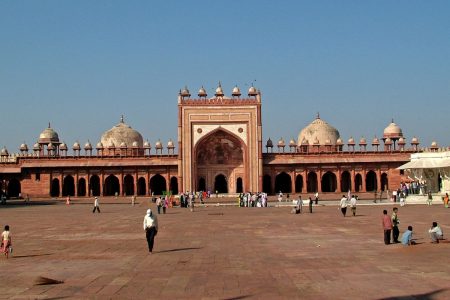
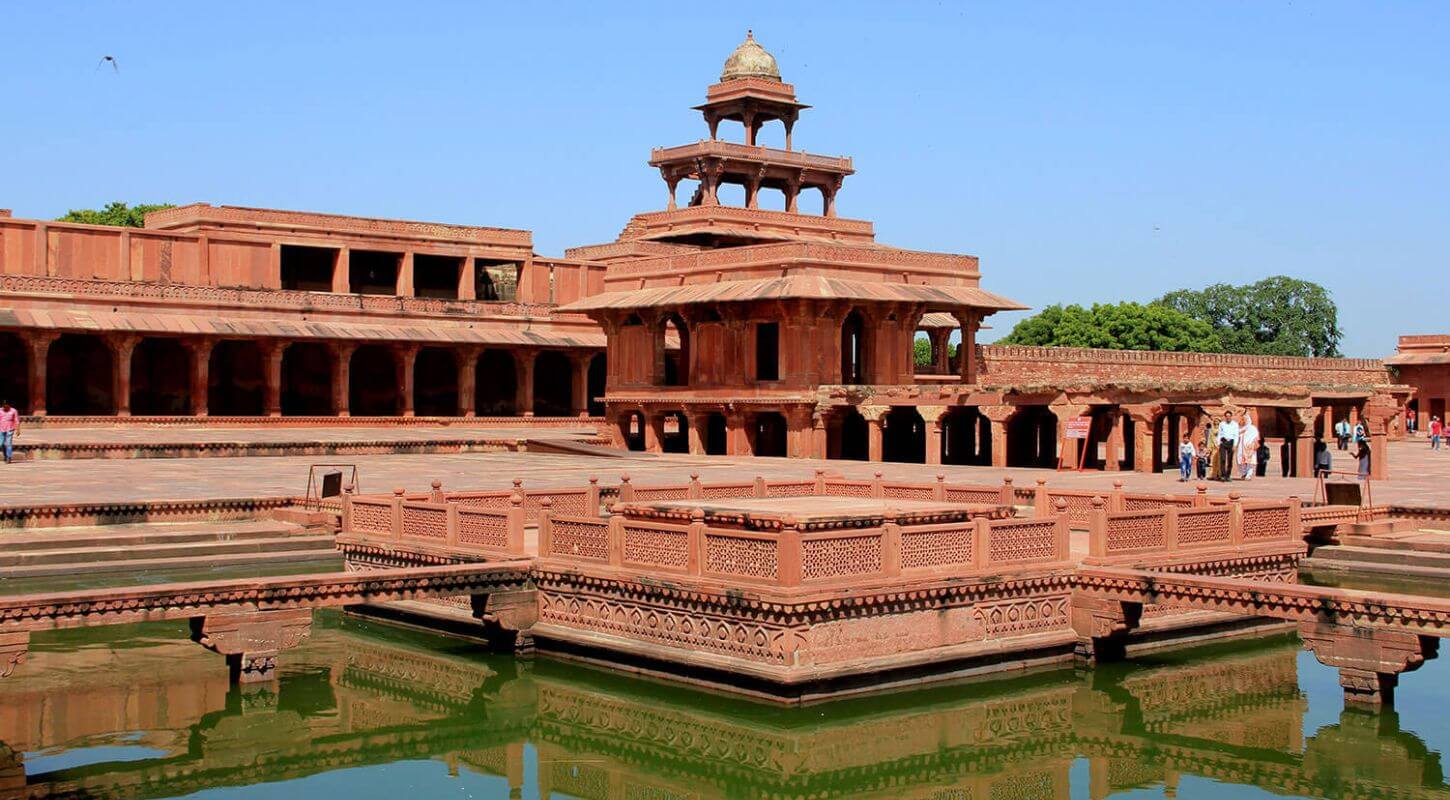
En route visit the Old city of Fatehpur Sikri.
The historical city was constructed by Mughal emperor Akbar
beginning in 1570 and served as the empire's capital from 1571
until 1585, when it was abandoned for reasons that remain unclear.
The surviving palace and mosque are a tourist attraction and a
UNESCO World Heritage Site.
The palace complex is lavishly ornamented and displays the riches
of Amer. Sheesh Mahal chamber of Mirrors. Diwan-e-Am or the Hall
of Public Audience is a beautifully proportioned hall open on
three sides and stands on two rows of ornamented pillars. Diwan
e-Khas or the Hall of Private Audience has delicate mosaic work in
glass. Sukh mandir is guarded by sandalwood doors inlaid with
ivory. Throughout the massive fort finely carved lattice windows,
exquisitely painted doorways, halls and finely sculptured pillars
crave for attention.
Overnight Stay at Hotel.
DAY 13: AGRA - DELHI
Breakfast at hotel.
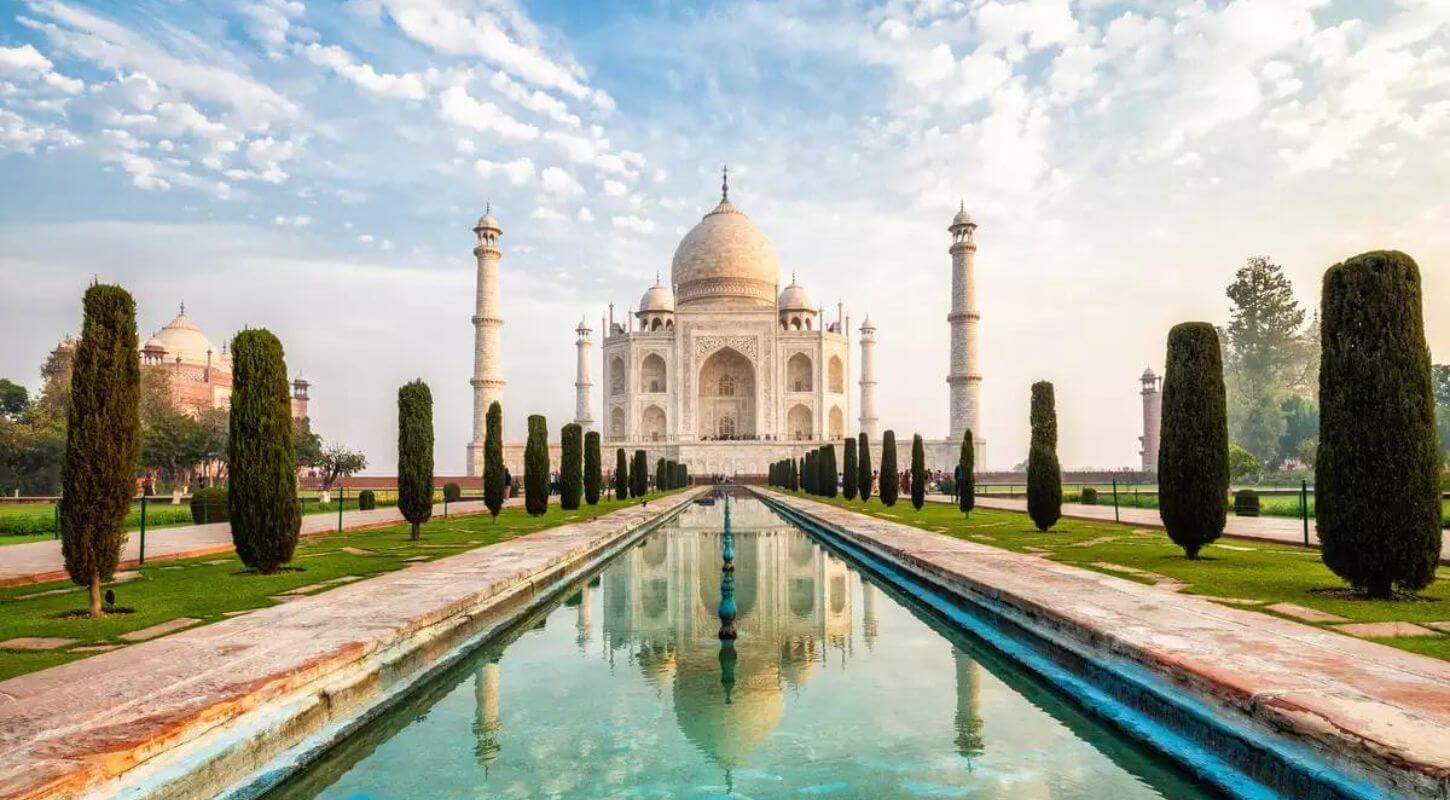
After breakfast visit the Taj Mahal. The Taj Mahal is a mausoleum
located in Agra, India, built by Mughal Emperor Shah Jahan in
memory of his favorite wife, Mumtaz Mahal. The Taj Mahal (also
"the Taj") is considered the finest example of Mughal
architecture, a style that combines elements from Persian,
Ottoman, Indian, and Islamic architectural styles. In 1983, the
Taj Mahal became a UNESCO World Heritage Site and was cited as
"the jewel of Muslim art in India and one of the universally
admired masterpieces of the world's heritage."
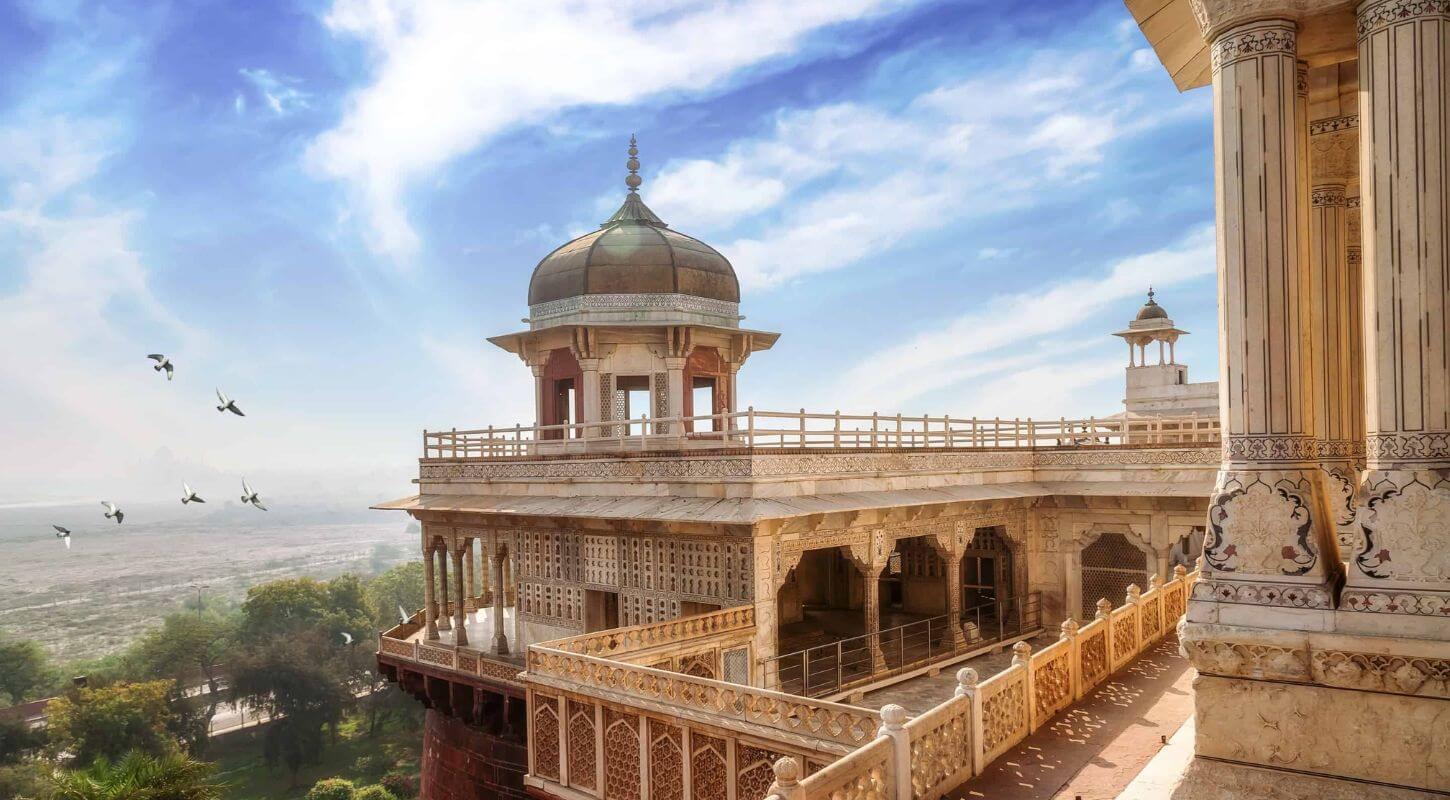
Agra Fort is a UNESCO World Heritage site. The fort is also known
as Lal Qila, Fort Rouge and Red Fort of Agra. It is about 2.5 km
northwest of its much more famous sister monument, the Taj Mahal.
The fort can be more accurately described as a walled palatial
city.
Continue towards Delhi.
Arrive Delhi late in the afternoon. Check in at hotel.
Evening at leisure.
Overnight at hotel.
Day 14: Delhi - Flight
Flight to onward destination.
Connect with the Raag Voyages Team to craft your personalized
journey through India